
WELCOME BONUS 300%
UP TO €2000 + 100
FREE SPINS
UP TO €2000 + 100
FREE SPINS
Home → Roulette
Roulette at Zetcasino
Only 10 Percent Contribution: What are the Consequences?
The contribution of table games, including roulette, to bonus wagering requirements is set at 10 percent. This means that for every €100 wagered on table games, only €10 counts towards fulfilling the bonus conditions. For the 300% welcome bonus up to €2,000, this translates to a substantial amount of play required.
To clear the full €2,000 bonus from table games alone, a player would need to wager €20,000. This is calculated by dividing the bonus amount (€2,000) by the contribution rate (0.10). Therefore, players focusing on roulette will find the wagering requirements considerably higher.
Consequently, this low contribution rate significantly extends the time and the total amount of money a player must bet to unlock any winnings derived from the bonus. Players should be aware that opting for roulette to clear bonus funds will require a much larger investment compared to other game types if they exist.
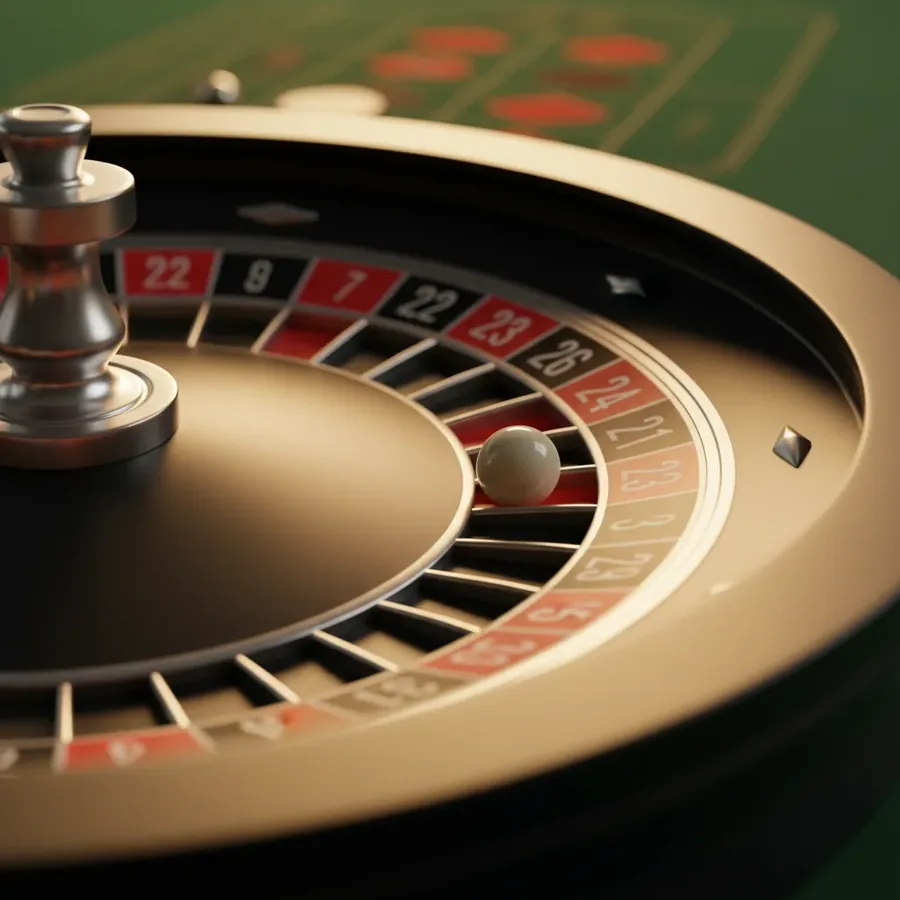
Martingale Fails at Table Limit After 8 Losses
Roulette variants like European Roulette and French Roulette typically offer an RTP of 97.30%, with a house edge of 2.70%. While these odds are favourable, betting systems such as Martingale are susceptible to table limits. A common scenario involves a player doubling their bet after each loss.
If a player follows the Martingale strategy on an outside bet with 1:1 payout, starting with a €1 bet, a streak of 8 consecutive losses would require a bet of €256 on the ninth spin. This is a direct consequence of the exponential increase in bets needed to recoup previous losses.
Many tables at Zetcasino will have a maximum bet limit, often around €5,000. Reaching this limit, as illustrated by the 8-loss Martingale example, means a player can no longer double their bet to recover funds, leading to a significant net loss from the initial bet. This highlights the risk of such systems.
Latency and Betting Window in Live Stream
Live casino games such as Lightning Roulette and Quantum Roulette Live, provided by Evolution and Playtech respectively, offer an immersive experience. These games operate with real dealers and a live video stream, but a limited betting window is a crucial factor for players. The betting window dictates the time available to place a wager.
In Lightning Roulette, the betting window is dynamically managed to accommodate the game's features, including the lightning multiplier rounds. Similarly, Quantum Roulette Live and Pragmatic Play Live's PowerUP Roulette also have defined betting periods. Players must place their bets before the dealer closes the window, typically after the ball has been spun.
This time constraint can be challenging for new players, especially if they experience slight latency in their internet connection. A delay could mean missing the opportunity to place a bet on a specific number or combination, potentially affecting their strategy or choice of wagers for that round.
Payout Table from 35:1 to 1:1
The standard payout structure across most roulette variants at Zetcasino features a top payout for a straight-up bet on a single number, offering 35:1. This means a €1 bet can return €36, including the original stake. Other inside bets, such as split bets (17:1) and street bets (11:1), provide progressively lower, but still attractive, returns.
For outside bets, the payouts are generally 2:1 for dozens and columns, and 1:1 for even-money bets like red/black, odd/even, and high/low. These lower payouts are compensated by a much higher probability of winning, as they cover a larger portion of the wheel. For instance, a 1:1 bet covers 18 numbers.
It is important to note that some special rules might affect these payouts. For example, French Roulette with La Partage on even-money bets can reduce the house edge to 1.35% by refunding half the stake when the ball lands on zero. However, standard European and American roulette adhere to the 35:1 to 1:1 payout table.
2.70 vs 5.26 Percent House Edge
The house edge is a critical figure for any casino game, representing the casino's theoretical profit over time. In European Roulette, which features a single zero (0), the house edge stands at 2.70%. This is consistent across all betting types on the European wheel, including inside and outside bets.
American Roulette, however, includes an additional zero (00), increasing the total number of pockets to 38. This extra pocket significantly raises the house edge to 5.26%. While the payout ratios for many bets remain the same as in European Roulette, the increased number of outcomes makes it less favourable for the player.
For beginners, understanding this difference is crucial. Choosing European or French Roulette variants over American Roulette when available can lead to better long-term results due to the lower house edge. For example, French Roulette with La Partage on even chances reduces the edge on those specific bets to an even lower 1.35%.
Roulette bet types at a glance
| Bet | Payout | Win Chance | Numbers Covered | House Edge |
|---|---|---|---|---|
| Roulette Amerikanisch (doppelte Null, 38 Sektoren) | Straight 35:1, Split 17:1, Street 11:1, Corner 8:1, Six Line 5:1, Dozen 2:1, Column 2:1, Rot/Schwarz 1:1 | 94.74% | 38 Sektoren (1–36 + 0 + 00); Auszahlungen wie beim europäischen Rad, aber der zusätzliche Sektor verdoppelt den Hausvorteil | 5.26% |
| Roulette Amerikanisch – Five Number Bet (0, 00, 1, 2, 3) | Five Number 6:1 (deckt 5 von 38 Sektoren) | 92.11% | Einzige Wette am amerikanischen Rad mit Edge über 5,26% – „Fallenwette“. Kein Äquivalent am europäischen Rad | 7.89% |
| Roulette Europäisch (einfache Null, 37 Sektoren) | Straight 35:1, Split 17:1, Street 11:1, Corner 8:1, Six Line 5:1, Dozen 2:1, Column 2:1, Rot/Schwarz 1:1, Odd/Even 1:1, 1-18/19-36 1:1 | 97.30% | 37 Sektoren (1–36 + 0); Auszahlungen wie für 36 Sektoren – daher konstanter Edge auf ALLE Wetten | 2.70% |
| Roulette Französisch mit La Partage (gerade Chancen) | Rot/Schwarz 1:1 (bei 0 Rückerstattung 50%), Odd/Even 1:1, Low/High 1:1; Innere Einsätze ohne La Partage: Straight 35:1, Split 17:1, Street 11:1, Corner 8:1 | 98.65% | Bei 0 wird die Hälfte des Einsatzes auf gerade Chancen zurückerstattet (Rot/Schwarz, Pair/Impair, Manque/Passe). En Prison gibt denselben 1,35%. Regel gilt NUR für gleiche Einsätze | 1.35% |
| Roulette Französisch, innere Einsätze (La Partage gilt nicht) | Straight 35:1, Split 17:1, Street 11:1, Corner 8:1, Six Line 5:1, Dozen 2:1, Column 2:1 | 97.30% | Rad gleich (37 Sektoren), aber La Partage/En Prison gilt nicht für innere Einsätze – Edge bleibt europäisch | 2.70% |
Error: Using Opposite Bets for Wagering Fulfillment
Placing opposite bets, such as betting on both Red and Black simultaneously, can lead to issues with wagering requirement fulfillment. While a single spin on European Roulette might appear to cover many outcomes, these specific bet types do not contribute to clearing bonus turnover. For example, a 10% game contribution towards a 40x wagering requirement on a 300% welcome bonus up to €2,000 means substantial turnover is needed. A €2,000 bonus would require €80,000 in wagering.
This exclusion is critical for beginners to understand when aiming to convert bonus funds into withdrawable cash. The bonus terms state that table games contribute 10% to bonus turnover. However, specific betting patterns, like covering almost all outcomes, are often explicitly disallowed. This means that even if a bet is placed, the funds wagered might not count towards the €80,000 target.
For instance, if a player wagers €100 on Red and €100 on Black, totaling €200, on a European Roulette wheel with a 2.70% house edge, this action would likely not reduce the €80,000 wagering requirement. Beginners should focus on bets that are clearly permitted to avoid misunderstandings and ensure their wagering progress is valid.
House Edge 2.70 Percent in One Number
The house edge represents the casino's statistical advantage over the player, and for European Roulette, this stands at 2.70%. This figure is derived from the wheel's configuration, which features 37 pockets (numbers 1-36 plus a single zero). This contrasts with American Roulette, which has a higher edge due to an additional pocket.
Understanding the house edge is fundamental for new players, as it directly impacts the theoretical return to player (RTP). A 2.70% house edge corresponds to an RTP of 97.30% on European Roulette for all standard bets. This means, over a vast number of spins, the casino expects to retain €2.70 for every €100 wagered.
While this 2.70% edge applies consistently across most bets on the European wheel, including simple chances like Red/Black at 1:1, it is important to note that specific variants might alter this. However, for the standard European Roulette, players can expect this statistical disadvantage on their wagers.
100 Euro Bankroll: 100 Rounds Simple Chances
With a bankroll of €100, a player could theoretically place 100 individual bets of €1 on simple chances at a roulette table. Simple chances, such as Red or Black, Odd or Even, or High (19-36) or Low (1-18), typically pay 1:1. These bets are common in European Roulette, which offers an RTP of 97.30%.
If a player were to exclusively bet €1 on simple chances for 100 rounds, and assuming a consistent outcome without any zeros, their bankroll would theoretically remain close to the initial €100, minus the house edge. The house edge of 2.70% means that over 100 such €1 bets, approximately €2.70 would be expected to be lost due to the zero pocket.
This simulation highlights how a smaller bankroll can sustain a significant number of rounds when betting conservatively on outside bets. However, the volatility of roulette means that actual results can vary wildly, and the €100 could be depleted much faster or, in rare cases, grow. The €2,000 welcome bonus with 100 free spins offers a much larger playing capacity.
37 Pockets vs. 38 Pockets: The Difference
The fundamental difference between European and American Roulette lies in the number of pockets on the wheel: 37 for European and 38 for American. The European wheel features numbers 1 through 36 plus a single zero (0), while the American wheel includes the same numbers plus an additional double zero (00). This extra pocket significantly impacts the game's odds.
This one-pocket difference directly inflates the house edge. European Roulette, with its 37 pockets and a single zero, presents a house edge of 2.70%. In contrast, American Roulette, with 38 pockets including both 0 and 00, carries a higher house edge of 5.26%. This makes European Roulette statistically more favorable for players.
For beginners, choosing a European wheel is generally advisable due to the lower house edge, offering better long-term theoretical returns. While payouts for certain inside bets like a Straight bet (35:1) are numerically the same on both wheels, the increased number of pockets on the American wheel means a lower probability of hitting that specific number.
Straight 35:1 vs Dozen 2:1 Hit Rate
A Straight bet in roulette, which is a wager on a single number, pays out at 35:1. On a European wheel with 37 pockets, the probability of hitting any single number is 1 in 37. This means for every 37 bets placed on a single number, one is expected to win, while 36 are expected to lose.
In contrast, a Dozen bet, covering 12 numbers (e.g., 1-12, 13-24, or 25-36), pays out at 2:1. The probability of winning a Dozen bet on a European wheel is 12 in 37. This significantly higher probability of hitting a winning outcome directly relates to the lower payout ratio compared to a Straight bet.
The hit rate for a Straight bet is approximately 2.70% (1/37), whereas the hit rate for a Dozen bet is approximately 32.43% (12/37). While the 35:1 payout offers the allure of a large win, the lower hit rate makes it a riskier proposition than the 2:1 payout of a Dozen bet, which occurs much more frequently.
Mistake: Choosing American Wheel with 5.26 Percent
The American Roulette wheel features 38 sectors, including both a single and a double zero. This configuration results in a house edge of 5.26%, compared to the lower edge found on other roulette variants. For players seeking better odds, understanding this difference is crucial.
When playing American Roulette, the payout for a straight-up bet on a single number remains 35:1, similar to European or French roulette. However, the presence of the extra '00' sector means that on average, more bets will lose over time, directly impacting player returns.
A straight bet at 35:1 on the American wheel, with its 5.26% house edge, means that for every 100 units wagered, approximately 5.26 units are expected to remain with the house long-term. This contrasts with the 2.70% edge on a European wheel, making it a less favorable choice for sustained play.
Corner 8:1 Covers Four Numbers
A Corner bet in roulette covers a block of four numbers on the betting layout. This bet pays out at 8:1, meaning a successful wager returns eight times the original stake plus the stake itself. It is one of several inside bet options available.
When placing a Corner bet, the player selects a square where four numbers meet. If the ball lands on any of these four numbers, the bet wins at the specified 8:1 ratio. This offers a different risk-reward profile compared to other bet types.
The payouts for various roulette bets, such as the 8:1 for a Corner bet, are standardized across many variants like European and French Roulette. This payout structure is designed to be consistent with the probability of hitting one of the covered numbers on a 37-sector wheel.
How Long is a Betting Phase at a Live Table?
Live roulette tables typically allow a betting phase that lasts for a set duration between spins. The exact time can vary depending on the specific live game provider and the pace of play chosen for that table. Players must place their bets within this window.
For instance, Lightning Roulette, offered by Evolution, and Quantum Roulette Live from Playtech, both provide live dealer experiences. While specific timings can differ, these tables generally allow players ample time to make their selections before the betting phase closes and the wheel spins.
Players at live tables need to be mindful of the betting phase duration, as it can range from approximately 15 to 20 seconds. This ensures that bets are placed and confirmed before the ball is released and winning numbers are determined for that round.
Straight 35:1 as Highest Single Payout
The highest single payout available in most standard roulette games is the Straight bet, which pays 35:1. This wager is placed on a single number, and a win returns 35 times the original stake, plus the returned stake. It represents the maximum reward for a single number bet.
Whether playing European Roulette with its 37 sectors or American Roulette with 38, the 35:1 payout for a Straight bet remains consistent. This payout ratio is standard and applies to any single number chosen by the player on the betting grid.
While some enhanced live roulette variants like Lightning Roulette or PowerUP Roulette can offer multipliers, the base payout for a direct Straight bet on a single number, without any special features, is capped at 35:1. This provides a clear benchmark for potential returns on individual number wagers.
Small Budget: Why Straight 35:1 Empties Quickly
For players with a small budget, consistently betting on Straight 35:1 can lead to rapid depletion of funds. This is because the bet requires a significant portion of a limited bankroll to make a meaningful return, and losses accumulate quickly if consecutive bets do not win.
A straight bet offers a high payout of 35:1, but it also comes with a low probability of winning on any given spin. The house edge, such as 2.70% on European Roulette, means that over time, losses are statistically more likely than wins, especially with a high-stakes bet.
Consider a player with a 100 EUR budget: a single 10 EUR straight bet at 35:1 would yield 350 EUR plus the stake if successful. However, losing this bet means 10% of the budget is gone instantly, highlighting the risk associated with such high-payout, low-frequency bets for smaller bankrolls.
Contact
Live - online chat
Banking









Providers












Zetcasino 2026